


From Trauma to Grace: Forgiving my rapist.
- Sep 15, 2025
- 18 min read
Trigger Warning:
This post contains descriptions of sexual assault, trauma, suicidal ideation, and addiction.
My introduction to sex was through rape. I was fifteen and had no real understanding of what sex meant in relation to myself. I knew the basics; what school lessons taught, what health campaigns implied, but I had never had a boyfriend, never really thought much about intimacy. It was something far off, theoretical. And then, suddenly, violently, it wasn’t. I will not linger on the details of that night, only to say that I was drugged and assaulted. What I can share is that it altered the trajectory of my life. In the immediate aftermath, I sank into a deep denial; not merely a pretence that nothing had occurred, but a wholesale refusal to acknowledge, consider, or speak of it. I moved through the world in stunned silence: eyes wide, words scarcely forming, only to retreat into days of sleep. Sleep became my refuge, my body’s way of shielding me from unbearable reality. It was as if my mind, unable to process the trauma, simply shut down, surrendering to darkness in order to endure.
One of the deepest wounds I carried was the quiet, corrosive belief that I had somehow become damaged goods. In the secret places of my heart, I had been waiting for marriage, holding that hope like a fragile promise. So whenever my mind returned to that night, I grieved not only the violence itself but the loss of a choice that should have been mine to make. Perhaps, in the fullness of time, I might have chosen differently; but it should have been a decision born of love and freedom, not one taken from me by force. In the months after the attack, I began to shrink. I had once been a singer and a dancer, full of energy and presence, but suddenly I wanted nothing that drew attention to me. The drama clubs, sports, and extracurriculars that had once been my joy no longer mattered; I just wanted to stay home, where it felt safe.
When I started college at sixteen, the idea of being seen as attractive became unbearable. I began dressing more like a tomboy, hiding behind loose clothes and muted colours, as if concealing my body could shield me from the memory that haunted me. Yet even in that self-imposed invisibility, there were cracks. I still had the occasional “girlie” day, small acts of rebellion where I tried to touch the femininity I had grown to fear. Those moments were fragile, fleeting, but they were my way of reclaiming pieces of myself; reminders that, even in the shadow of what had been taken from me, I could choose to assert my own body, my own identity, on my own terms.
My understanding of men began to be shaped, painfully, by experience. Fairy tales had painted them as saviours: princes on horseback, gallant and noble. Society spoke of men as providers and protectors, yet my life had shown me something starkly different: fathers who were inconsistent or absent, a brother who ruled with an iron fist, and, beyond that, a world in which predators lurked. I became fearful of men. I would walk ahead of them on the street, hesitate to be alone in their presence, even freeze when touched. And yet, paradoxically, I longed for connection. I craved companionship, love, and protection. But when boys showed interest in me, I found ways to sabotage the very relationships I yearned for. If I was not creating drama or picking fights, I withdrew completely, shutting down, refusing to communicate, or, at times, testing love through infidelity. My fear and my desire collided, leaving me caught between longing and self-protection, unable to trust that love could be given freely.
In the wake of the assault, thoughts of self-harm began to surface with unsettling regularity. What had once appeared as a passing shadow, an intrusive thought that visited perhaps once a year, slowly tightened its grip. Monthly became weekly; weekly blurred into daily. There were moments when I would step into the street without looking, almost inviting whatever might come, quietly hoping a car might take the choice from me. My mind felt consumed by the idea of escape. When it wasn’t death that preoccupied me, it was grief; a vast, aching sorrow that settled over my life like a weight I could not lift. It was constant, relentless, a heaviness that followed me from waking to sleep, refusing to loosen its hold.
Alcohol and drugs became the quickest way to silence the feelings I could no longer bear. As I grew older, it wasn’t unusual for me to go out night after night, chasing any form of escape that might dull the ache inside me. In the early years, there were pockets of sobriety, brief seasons when I tried to gather myself, but the depression never lifted. He never left my thoughts. With each unwelcome memory, something dark and hot gathered within me: a mix of vengeance and rage I didn’t know how to name. At times, I replayed the night in my mind, the way he had used me and then discarded me, as if I were inconsequential, as if I weren’t even human. I wondered whether he ever thought of me at all. Did he regret what he had done? Did the memory keep him awake at night? I prayed, sometimes desperately, that it would haunt him the way it haunted me.
As the years passed, he became a shadow trailing me, intruding into moments that had nothing to do with him. I imagined him with a woman beside him; someone who believed herself loved, someone who trusted him. Did she know what he had done? If he had daughters, did he ever pause to consider how it would feel if someone took from them what he had taken from me? To the world, he was likely just a man with a job, with friends, with a family who believed in his goodness. But in my heart, he remained the monster who had stolen something from me that could never be returned; a figure who walked freely through his days while I laboured under the weight of what he’d left behind.
Nearly two decades later, I hit what I thought was rock bottom. I had endured a brief spell of homelessness and had become a full-blown addict. Friends were gone, family was absent, and I drifted alone in the world, weighed down by depression and gripped by excruciating anxiety. I often say I believed I had reached rock bottom; only to discover that rock bottom had a trapdoor. In that season of utter despair, I cried out to a God I wasn’t sure I believed in. Miraculously, He answered.
When I encountered salvation, the first area of my life that God challenged me to confront was forgiveness. My heart felt heavy, crushed beneath the weight of years of unforgiveness and resentment I hadn’t known how to release. I remember reluctantly sitting down with a pen and paper, listing the people I needed to forgive. He was last to go on that list. He became a fork in the road, an insurmountable wall, a wound I wasn’t sure could ever heal. Even thinking of him, nameless, faceless, made my body tense, coiling with anger, fear, and pain.
Because I had been drugged, my memory of his face was blurred at the edges, a fragment I could never quite bring into focus. I couldn’t have identified him in a line‑up. Yet his absence of a face did nothing to diminish the fear. Everywhere I went, questions stalked me. During my years working for a large tourism company, every time I greeted a new guest, a small, terrified part of me wondered: Could he be one of them? Walking through the city, the possibility felt omnipresent. I imagined him in crowds, in passing strangers, in the man seated beside me on the train. Even on dating apps, I found myself hesitating over faces, asking whether I had unknowingly swiped past the man who had stolen so much from me. Even if my eyes couldn’t recognise him, would my body? And if, by some terrible chance, I ever saw him again, how would I react? What would rise up in me: fear, anger, paralysis, grief? I didn’t know. The questions were relentless, a shadow I could never quite outrun, trailing me through nearly twenty years of my life. How was I supposed to forgive someone whose violence had shaped so much of my pain? Someone whose presence, real or imagined, had become the ghost I could never stop encountering?
I argued with Jesus constantly. “Well, respectfully, Jesus,” I would say, “this was rape. You don’t know what that feels like. You don’t know how it broke me, how it changed my life. Where were You when it happened? Why didn’t You stop it? You didn’t seem to care when I was left broken, in the middle of a street, covered in my own blood, dazed, confused, shocked, and afraid. And now You’re asking me to forgive? You’re asking me to let go of what destroyed me? You’re asking too much!” Sometimes it felt as if I were shouting into a void. Other times, I cried until my body shook, my chest constricted, my stomach twisting, trying to make sense of a world in which I had been violated; and yet God’s call was to forgive. It felt impossible, unbearable, a demand that my brokenness could not yet meet.
And still, in the quiet that followed my rage and tears, I sensed Him there. Not impatient, not condemning, simply waiting. Waiting for me to bring every raw, jagged piece of my heart, every splintered shard of anger and pain, to Him. Waiting for me to place before Him the fragments of a life marred by violence, and to allow Him to begin the slow, painful work of restoration.
I was furious. So furious, in fact, that I refused to forgive, convinced that I would rather face hell than forgiving him. If Jesus couldn’t understand why I could not forgive, then perhaps I didn’t want to spend eternity with Him anyway. Where was the justice in that? Where had God been in my pain? Forgiveness felt like a demand to release my rapist from accountability while leaving me fractured, as if my own restoration mattered little in His eyes. Whenever the anger surged, whenever my emotions threatened to overwhelm me, I turned my questions back to Jesus; not seeking comfort or healing, but to vent, to rage against the injustice that had defined so much of my life. And frustratingly, all He would ever say in His calm, gentle voice, “I forgave you, didn’t I?” It was not the absolution I sought.
IAs the weeks turned into months, I made a conscious decision: I would park the work of forgiving him. Instead, I focused on the verse “Seek ye first the kingdom of heaven” and gave myself permission to simply bask in God’s love for me. I kept my eyes fixed on Him, letting His presence fill the spaces where anger and grief had once dominated. Every now and then, I returned to the piece of paper with the names on it. The others had been crossed off, but he remained. My level of anger became the measure of whether my heart was softening, and, incrementally, it was.
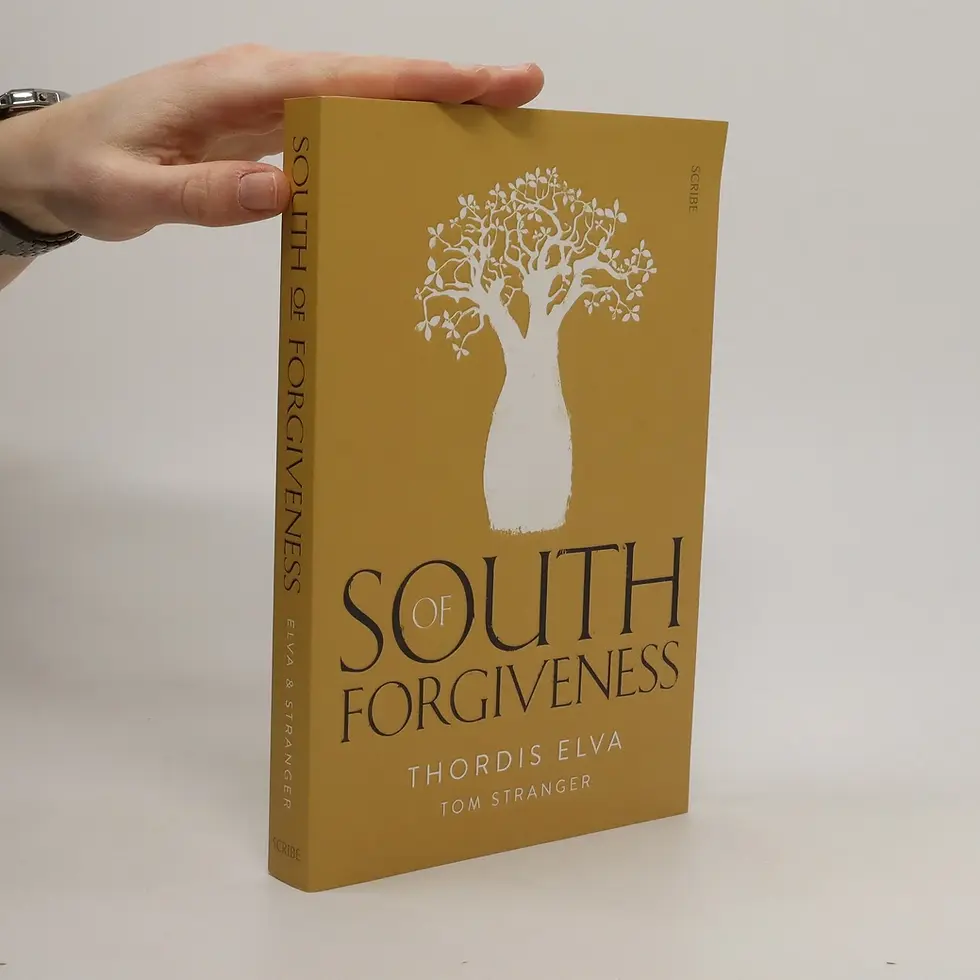
Six months after being saved, I realised I could no longer avoid the impossible work of forgiveness. Curious how other women had navigated similar journeys, I picked up South of Forgiveness, the story of Thordis Elva Thorvaldsdottir. It chronicled her assault and her long journey toward healing and freedom, a journey in which she made the radical choice to confront and even collaborate with her perpetrator, becoming the first rape survivor to do so publicly. We were similar in age when we were attacked, she drunk, I drugged, and both of us had taken years before even beginning to process our trauma. I refused to read the sections written by her rapist, Tom. I did not want to understand him, empathise with him, or know anything about him. I imagined his words as justification, minimisation, or self-explanation, and the thought of reading them made my blood boil. Though he was not my attacker, I despised him as though he were. All I wanted was to understand what she had endured, how she had survived, and how she had overcome. Honestly, the book did not make me forgive. It was not a turning point for my own heart. What it did do was something equally important: it showed me that forgiveness was possible, a distant but attainable horizon; something I could not yet imagine for myself, but something real nonetheless.
I took every emotion, every question, every ounce of vitriol to Jesus. I let Him hear it all—my anger, my grief, my confusion, my rage. I poured out years of pain and fury, and He let me vent, silently absorbing the weight of what I had carried for so long. When I was finally exhausted, every tear spent, He would say the same words, patient and unwavering: “I forgave you, didn’t I?”. With each gentle reminder, He gave me space to sit with my feelings without shame or judgment. I came to liken forgiveness to stuffing people into a closet; emotions, pain, resentment, all of it crammed inside. On good days, I would pull someone out of the closet, usually those whose offences felt small compared to my rapist: a school bully, a cousin who tormented me for years, the classmates who had laughed at my awkwardness. Each act of forgiveness brought a measure of peace. But when it came to him, I would slam the closet door shut and vow never to go there again. The thought of opening it felt unbearable. He remained, for months, the one wound I could not yet lay down, the one name that refused to yield to the gentle persistence of grace
God never made me feel as though I had to forgive him immediately; or else. Instead, His focus was on healing my heart. When I got saved, my depression lifted almost instantly, as if a switch had been flipped. By that point, I had battled the darkness for sixteen years, relying on alcohol and high doses of multiple antidepressants - medications I no longer needed after encountering His grace. Not long after, I began therapy. I intentionally chose a man, believing I needed to confront my fear of men, and I sought a Christian therapist, someone who could speak both psychological and biblical truths into our sessions. It turned out to be a God-move: this compassionate, faith-driven therapist offered discounted sessions, and sometimes even free ones, because he was genuinely invested in my healing. EMDR therapy became a lifeline; it allowed me to work through the feelings surrounding my trauma without recounting every painful detail; until the day I was finally able to voice something I had never admitted to God before: "Lord, I know I have to forgive him, but I don’t want to." I was not defensive. I was not yelling into a void. I was not rationalising my refusal. I was simply raw, unvarnished, honest. I did not want to forgive him. I did not believe he deserved it. And yet, even in that honesty, there was a freedom; a space to bring the truth of my heart to God without shame or pretence.
What had changed over those months was the time God spent with me, patiently revealing His character. Seeing who He truly was made me want to know Him more, and the desire to know Him more made me want to remove anything in my life that stood between us. From that moment on, I learned to tell Him exactly what I was feeling, confident that He would not condemn or abandon me for it. Before, I had been like a cornered raccoon, desperately defending myself; or, in this case, my stance on unforgiveness. Now, I could be unflinchingly honest, examining every feeling in my body, mind, and heart, and bringing it before Him. I became vulnerable about my sadness, my grief, and the full spectrum of my emotions, not just the reflexive anger. That openness, that transparency, was an invitation for Him to work in the deepest parts of my heart. Over time, my prayers evolved. “Lord, I know I have to forgive him, but I don’t want to…” became “Lord, I know I have to forgive him, but I’m not yet willing.” Eventually, it became “Lord, I know I have to forgive him. I want to be willing.” And when the emotions grew too overwhelming, I was honest about that too, laying them aside for a while. Like staring at an unsolvable problem, sometimes the solution only comes when you step away, live your life, and return with fresh perspective. Each time I returned, my heart softened a little more, until finally I could ask with sincerity: “Ok Lord, how do I forgive him?”
The process began with writing a letter to my rapist. The Holy Spirit guided me, instructing me to approach it as though I were giving a victim impact statement in a court of law: to write freely, without overthinking. When I finished, I stood and read it aloud, as if speaking before a judge. I was taken aback by my own words. There was no vitriol, no hatred, no attacks. At first, I detailed the ways the assault had affected me; medically, emotionally, mentally. But as the letter continued, my words shifted. I expressed hope that he would come to know Jesus while he still had time, and that his family would be spared from experiencing the same harm. And then, at last, I wrote the words I had once thought impossible: “I forgive you.” After reading it aloud, I held onto the letter for several days before burning it. The act was intensely personal; it felt too intimate to leave lying around for anyone else to find. The ritual; the writing, the reading, the burning, was both symbolic and practical. It became a way to hand over the pain, the anger, and the weight of forgiveness into God’s hands, allowing Him to take what I could not bear alone.
I would love to say that forgiveness lifted a weight from me in that moment, but the truth was more complicated. Grief followed. I had forgiven him, yet forgiveness felt like a concession, as if I had surrendered something I wasn’t sure I wanted to. It felt, in its own way, like a different kind of violation.
And yet, when I thought of that night, the emotions no longer pressed down with the same intensity. God sat with me in the pain, walking me through the processing of each feeling. He understood the language of my tears, even when words failed me. What was most profound was that the emotions were entirely mine. They were not tied to that night. They did not include him. They were simply about what I was experiencing in the struggle: the grief, the sorrow, the relief, and the recognition that I was finally allowing myself to feel the emotions I should have permitted myself to feel all those years ago.
A year later, I began attending church, and it was there that I met Christian men for the first time who were markedly different from any I had known. Up until then, the Christian men I encountered did not live in accordance with Christ’s call, and none had ever protected or stood up for me. But the men God placed around me in that season were different. They stood in the gap, not just for me, but for all the women in their lives: their wives, their daughters, their communities. Their protection was not merely emotional; it was physical, practical, and consistent. They carried an authority rooted in submission to Christ, evident in their words, their actions, and the way they navigated the world. Christ shone through them, and witnessing that illuminated a truth I had never seen: men could be trustworthy, godly, and protective. Slowly, this began to reshape my heart and mind about men. I stopped lumping them all together into a single, monolithic category and began seeing them as individuals. I noticed how integrity, gentleness, and courage could coexist in a man. Yes, there were still flawed men in the world, but these Christian men showed me that there were far more good, decent men; men who lived with Christ at the centre of their hearts and lives. For the first time, I could see it, believe it, and even begin to hope: healthy, godly men truly existed in the world.
It’s been six years, and I still see God at work in my healing. I carried that night with me for nearly twenty years, and while I know God is capable of instantaneous healing, I have come to love that He is also a God of process. Healing something so deep and enduring does not happen all at once. It comes in small steps, in moments of breakthrough and in moments of setback. God meets me in each of those moments, guiding me gently, giving me space to wrestle with my anger, grief, and fear, and showing me that it’s okay to take the time I need. Process does not mean slow in a frustrating way; it means intentional. It means learning to live fully again while still carrying pieces of the past, gradually reclaiming my life, my safety, and my trust. God has been at work not only in my forgiveness but in the rewiring of my thoughts, my feelings, and my perceptions of men, relationships, and even myself. Each step of the way, He has been faithful, teaching me to navigate triggers, grief, and anxiety, and showing me that healing is not a single moment, but a journey.
Forgiveness and healing do not erase triggers. The black leather jacket my attacker wore that night still carries a weight; I have never been able to wear one myself. Seeing someone else in one no longer transports me fully back to that moment, but it does stir sadness. At the time, his car was popular, and every sight of it would throw me back into that memory. Thankfully, that car is now rare. Other triggers remain: men emerging from bathrooms, zipping trousers or adjusting belts, any conversation or report of sexual assault on the news. I do not experience flashbacks in the same way, but my body immediately tenses. I am still cautious around men, afraid of the dark, hesitant to be alone outside at night. Even in rideshares, I notice a sense of relief when a woman shows up instead of a man. These responses are not mere habits; they are reminders of the deep imprint left by that night. I work to remind myself that I am safe, to challenge negative thoughts as they arise, and to breathe through the tension in my body. These moments ebb and flow; they are not constant, but when they surface, I meet them without shame, leaning on the tools, faith, and resilience I have cultivated over the years.
As for him, I find myself genuinely wishing him well. I do not desire misery for his life, nor do I want him to suffer. I pray that he is happy, healed, and unburdened by thoughts of the pain I once endured. Because I am no longer suffering. I am walking in freedom. I accept the trauma may never completely leave my body, but I have come to understand the difference between being controlled or defined by it and living with the memory as part of my story. Today, I can think about him, acknowledge the pain he caused, and even wonder about him without being swallowed by it. I can hold space for my own hurt and grief without making him its cause. At the same time, I strive to extend a measure of compassion toward him; not to excuse what he did, but to recognise that he too is human, broken, and in need of transformation. Occasionally, I pray that he has come to know the Lord, that he might be confronted by the weight of his actions, and that his life, and the lives of those around him, might be shaped by redemption rather than destruction. The feelings of hurt may always linger, because I am human and because what happened was real and life-altering. But they no longer define me, and they no longer control me. Forgiveness did not come through my own strength; it came through Christ. And in that, I have found a fragile yet profound peace; a space where I can grieve, remember, and hope for healing, both for myself and, in some measure, for him.
It is a hard truth when speaking about rape, but the command to forgive is not optional. It comes with no caveats. I had to make a choice: hold on to the bitterness and pain, or reach for the hem of His garment. I could not do both. I do not think it was a radical shift in my mindset so much as a recognition that there was something I wanted more, something worth relinquishing my anger and resentment for, and that was growing closer to Christ. Forgiveness, in many ways, drew a line in the sand for me about that night. It was as though I made a conscious decision to release it, to let go, without requiring justice or an apology. That realisation was profoundly freeing: my forgiveness could never be contingent on someone acknowledging their wrongdoing. If I waited for an apology every time, I would never forgive.
It became less about what I wanted to do and more about what I needed to do to attain what I truly longed for: a heart increasingly aligned with the righteousness of Christ, a life shaped by His love rather than by the wounds of the past. Forgiveness became the bridge between what had happened and the freedom, peace, and closeness with God that I had been seeking all along.
God does not orchestrate the painful events in our lives, nor does He allow them simply to craft a powerful testimony. I do not share my story often, and when I do, it is with women who have walked similar paths. In those moments, it brings me healing to offer encouragement and hope, yet the story remains deeply personal; a testimony I share only when and where I feel safe. The wounds are still present. The medical consequences linger. And yet, alongside them runs healing, and grace covers my weaknesses and shrouds my sadness. I no longer live consumed by the rage and resentment that once defined me. I no longer drown my pain in drugs. I turn to God because if He can hold something so painfully delicate and raw, then I trust He can handle whatever else life places in my path. Justice is His, and only He truly knows what resides in the heart of that man. I do not know who he has become, but I live with the hope that he comes to know Christ and His love, and that he might walk into honest repentance while he still can. That, to me, would be a far more meaningful resolution than any time behind bars or any torment he might carry. I see a truth that extends beyond my own story: life with God is not about the absence of pain, but about the presence of grace, the courage to face it, and the willingness to keep walking toward the light, even when the shadow of the past lingers. It is in that space, fragile yet real, that freedom lives.
Click the image to read our full review of South of Forgiveness.”

Comments